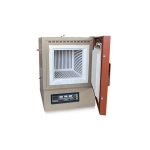
Water Retention Apparatus

Product Code : EL-CTLE-10355
Water Retention Apparatus (code EL-CTLE-10355) is a suction apparatus for determining the water retention value of cement and lime. Two models are offered: one with an aspirator pump and an analog vacuum gauge with regulator, weighing about 8 kg, and one with a portable vacuum pump of 0.1 mbar ultimate vacuum and a digital vacuum regulator with a 1 mbar resolution gauge, running on 230 V/50-60 Hz/1 ph.
Get a quote: use the Add To Cart enquiry button below, or send your quantity and delivery location through the contact page.
Specifications
| Parameter | Detail |
|---|---|
| Use | Determining the water retention value of cement and lime |
| Models | Two |
| Common parts | Three way stopcock, flask, rubber gasket, glass funnel, perforated brass dish and stand |
| Standards | ASTM C91, ASTM C110 |
| Model with aspirator pump | |
| Pump | Aspirator pump |
| Vacuum gauge | Analog, with vacuum regulator |
| Weight | Approx. 8 kg |
| Model with portable vacuum pump | |
| Pump | Portable vacuum pump, ultimate vacuum 0.1 mbar |
| Vacuum regulator | Digital, complete with vacuum gauge of 1 mbar resolution |
| Power supply | 230 V/50-60 Hz/1 ph |
| Supply | |
| Product code | EL-CTLE-10355 |
| Manufacturer | Engineering Lab Equipment, Ambala, Haryana, India |
What Is the Water Retention Apparatus Used For?
Water retention shows how well a fresh mortar holds its mixing water against the suction of absorbent bricks or blocks, which affects bond and the curing of the joint. The flow of the mortar is measured first; a layer is then placed in the perforated brass dish, set over the glass funnel and flask, and suction is applied through the three way stopcock at the vacuum set on the regulator for a fixed time. The mortar is remixed and its flow measured again, and the water retention value is the flow after suction expressed as a percentage of the original flow.
What to Specify When Ordering
- Quantity — the number of apparatus required.
- Model — the aspirator pump model with analog vacuum gauge, or the portable vacuum pump model with digital vacuum regulator.
Frequently Asked Questions
What does the Water Retention Apparatus determine?
It is used to find the water retention value of cement and lime, that is how much of its mixing water a fresh mortar keeps when suction is applied.
How do the two models differ?
One model works with an aspirator pump and an analog vacuum gauge with regulator; the other has a portable vacuum pump and a digital vacuum regulator complete with vacuum gauge.
What vacuum does the portable pump model reach?
Its vacuum pump has an ultimate vacuum of 0.1 mbar, the digital regulator's gauge has a 1 mbar resolution, and the model runs on a 230 V/50-60 Hz/1 ph supply.
Which parts are common to both models?
Both include a three way stopcock, a flask, a rubber gasket, a glass funnel, a perforated brass dish and a stand, in addition to their own pump, regulator and gauge.
How heavy is the aspirator model?
The aspirator pump model, with its analog gauge, regulator, flask, funnel, dish and stand, weighs approximately 8 kg.
Which standards are listed for it?
The standards listed for both models of the Water Retention Apparatus are ASTM C91 and ASTM C110.
OEM Manufacturer
Buyers of the Water Retention Apparatus deal directly with its maker, Engineering Lab Equipment (Engineering Labs Equipment Pvt Ltd), whose works are at Plot No. 43, Industrial Park, Sector 2, Growth Center, Saha, District Ambala, Haryana, India. The company designs, makes and tests cement testing equipment such as Vicat and Blaine apparatus, moulds, mixers and curing equipment, supplies engineering colleges, polytechnics, technical training institutes and research laboratories in India and overseas, and builds to institution-specific requirements on request. Tender details are on the Tenders/OEM page.
Related Cement Testing Equipment
- Mortar Mixer Machine — mortar mixer with a 6 litre bowl and adjustable revolving and planar speeds.
- Muffle Furnace — cement and lime ignition furnace, 1200 °C maximum, with a 210 × 280 × 145 mm chamber.
- Le Chatelier Moulds — spring-tensioned split-cylinder moulds, 30 mm i.d. × 30 mm high, for cement expansion tests.
- Pat Test, Brass Ring Mould — 100 mm brass ring, 5 mm deep with 5° taper and glass plate, for lime and plaster pats.
- Reactivity Test Apparatus — quicklime reactivity set with 1000 ml Dewar vessel, stirring motor and digital or datalog thermometer.
See the full Cement Testing Lab Equipment range or all Civil Engineering Lab Equipment.
Request a Quote
For this and other cement testing lab equipment, schools and colleges can contact Engineering Lab Equipment, a manufacturer, supplier and exporter based in Ambala, India. Quotations are given on request: send the number of apparatus and whether the aspirator pump or the portable vacuum pump model is needed and your delivery location through the contact page, or add the Water Retention Apparatus to the enquiry cart from this page.
Last updated: October 2026